
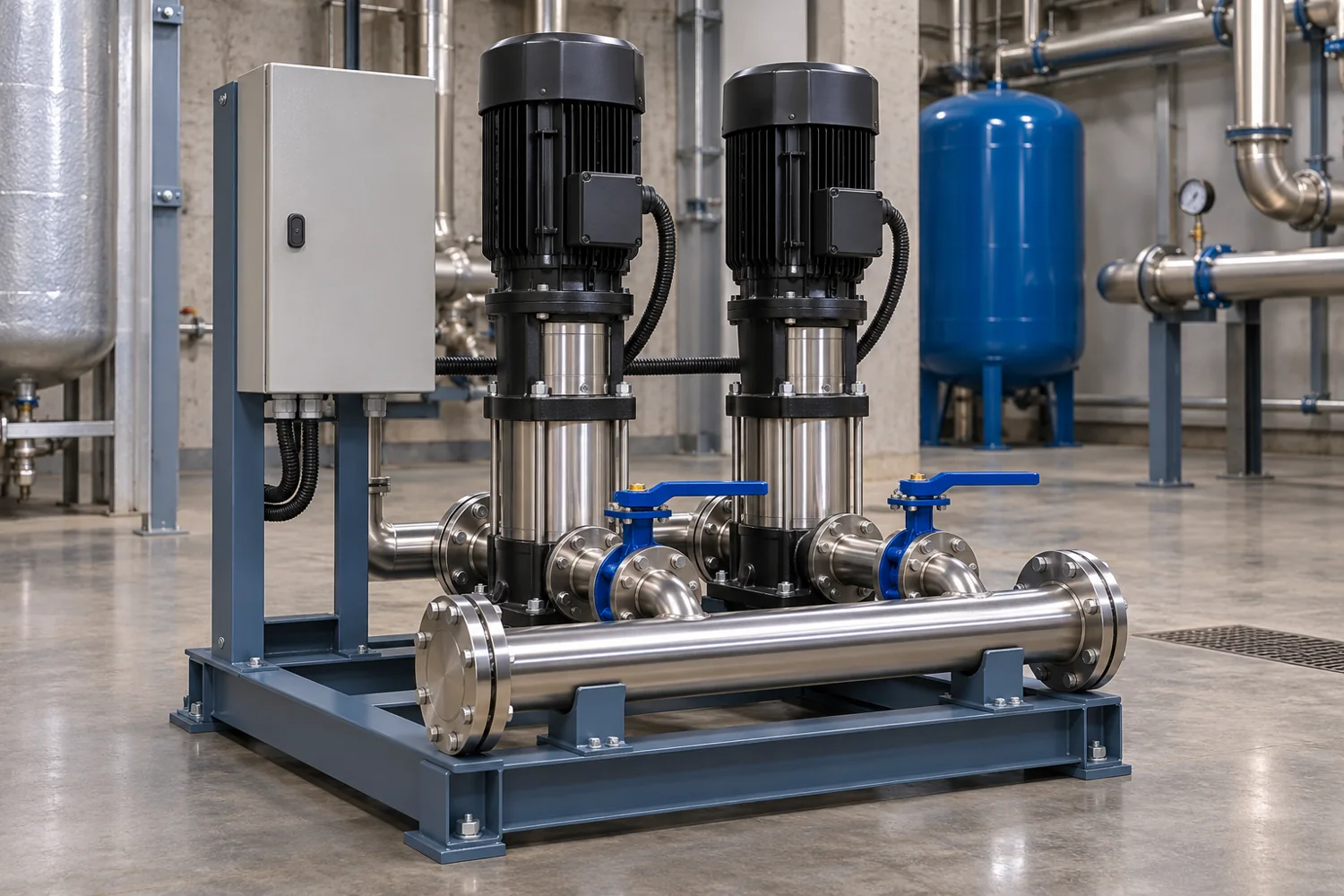
Sizing inputs and standards
- Duty point
- Provide design flow (m³/h), minimum inlet pressure and required terminal pressure. Include elevation and pipe losses in pump head and deduct available inlet pressure head.
- Sizing example
- At 10 m³/h, a 20 m elevation rise, 5 m loss, 15 m terminal head and 10 m available inlet head require a 30 m pump duty head. Check pump curves, efficiency and standby changeover at that point.
- Materials, connections and configuration
- Confirm pump casing, impeller, manifold and seal materials. List flow and head per pump, duty and standby count, connection DN, valves, variable speed panel, pressure sensors and low-water protection.
- Reference standards
- Check GB 55020-2021 for building water supply. For non-negative pipe system booster equipment, also check GB/T 26003-2010 and the inlet connection conditions.
Project questions
What should I provide before retrofitting a pump room?
Provide the pump nameplate, current piping drawing, inlet and outlet pressure and operating flow. Note when faults or pressure fluctuations occur.
Should I consider standby pumps and pressure zones?
Define operating and standby needs based on water supply continuity, outage impact and building zones. Ask the project team to confirm them.
Before requesting a quote
- Operating conditions
- Combine static lift, terminal pressure, pipe and fitting losses, allowing for available inlet pressure.
- Installation and access
- Plot normal and peak duty on the pump curve. Check operating range, input power and suction conditions.
- What to confirm
- Record water temperature and inlet pressure. For sewage pumps, add solids, fibres, sump levels and lifting access.